Before You Bet, Read This Football Team Breakdown
A football team is a structured group of players organized to compete across one of several football codes — association football (soccer), American football (NFL), Canadian football, or Australian ru...
Before You Bet, Read This Football Team Breakdown
A football team is a structured group of players organized to compete across one of several football codes — association football (soccer), American football (NFL), Canadian football, or Australian rules. In the NFL alone, 32 franchises compete across two conferences and 8 divisions, with active rosters capped at 53 players each. In association football, FIFA recognizes 211 member associations, each fielding national squads that converge every four years at the World Cup — the next edition being the 2026 FIFA World Cup, co-hosted by the United States, Canada, and Mexico. According to YouGov's 2026 fame rankings, the Green Bay Packers lead US recognition at 92%, while the Kansas City Chiefs dominate recent betting volume cycles. At Football Compass, we break down these team structures, formation choices, and performance data daily — so you back the right squad, not just the famous name.
The word "football team" means something radically different depending on which side of the Atlantic you're on — or which league you're betting into. That gap is exactly where most casual punters lose money. Familiarity with a team name is not the same as understanding its competitive structure, squad depth, or tactical flexibility. Over the next few minutes, Football Compass is going to walk you through the structural realities behind what makes a football team — any football team — worth your attention. By the time you finish, you'll see squads differently.
Is a Football Team Really Just the 11 Players You See on the Pitch?
No — what you see on the pitch is the matchday starting lineup, which is typically 11 players, but the full squad behind any competitive football team runs considerably deeper. In the Premier League, clubs carry 25 registered over-21 players plus unlimited under-21s; in the NFL, active rosters cap at 53.
The visible 11 is the product of selection decisions made from a much larger pool. In the English Premier League, a matchday squad is trimmed to 18 players — 11 starters and 7 substitutes — drawn from a registered 25-man senior roster. That means 7 fully professional players don't even make the bench on a given match day. In the NFL, the distinction is sharper: a 53-man active roster exists, but since the 2011 collective bargaining agreement, only 48 players actually dress for a regular-season game. Five roster players are active but inactive on gameday — suited up, on payroll, invisible to cameras. This is an operational detail most casual observers miss entirely, and it matters when assessing a team's available depth during injury crises.
Beyond headcount, a football team's competitive identity is built by roles that never appear on the pitch: coaching staff, video analysts, sports scientists, and physiotherapists. A top-tier UEFA Champions League club like Real Madrid or Liverpool FC typically employs north of 80 support staff for a first-team squad of 25. The actual "football team" is an organization, not just the 11 in jerseys. As Wikipedia's football team entry notes, "the benefit of club formation is that it gives teams access to additional volunteer or paid support staff, facilities and equipment." When analyzing a team's performance potential — especially mid-tournament at the 2026 World Cup — factoring in squad depth and support infrastructure is what separates sharp analysis from fan instinct.
[Internal Link: how squad depth affects match betting odds]
How Does a Football Team Handle Tactical Shifts Mid-Game?
Tactical mid-game adjustments — substitutions, formation changes, pressing triggers — are managed by the head coach using a combination of pre-planned contingency structures and real-time signal reading. In association football, a team typically carries 3 substitutions (5 in most domestic leagues post-2020), and elite coaches like Pep Guardiola and Carlo Ancelotti use them as systemic levers, not panic buttons.
In association football, mid-game tactical shifts follow a clear hierarchy. The first layer is positional — a winger drops into a deeper midfield role to close space without a personnel change. The second layer is personnel — substituting a press-heavy forward for a target striker to switch from a high-press system to a direct-play model. The third layer is structural — changing the formation itself, say from a 4-3-3 to a 5-4-1 defensive block to protect a narrow lead in the final 20 minutes. According to Wikipedia's overview of association football tactics, formations are not rigid grids but fluid reference points that teams move around dynamically in response to game state.
In the NFL, tactical complexity scales differently. Teams carry both an offensive coordinator and a defensive coordinator — effectively two head tacticians operating simultaneously on the same sideline. A single football team in the NFL might deploy 12 distinct defensive packages across a single game, shifting personnel groupings based on down-and-distance, opponent tendencies, and live score differential. The Buffalo Bills, Kansas City Chiefs, and Philadelphia Eagles — three of the most analytically sophisticated franchises in the NFL through the 2025-26 season — each run multiple base formations and rely heavily on pre-snap motion to disguise coverage assignments and manipulate opponent reactions before the ball is snapped. This layering is what bettors who focus only on win-loss records consistently miss: a team with a mediocre record can still cover spreads week after week through smart schematic execution. Understanding in-game adaptation is core to what Football Compass builds its tactical analysis around — not just who won, but how they responded when their initial plan stopped working.
[Internal Link: formation guide for 2026 World Cup team analysis]
What About NFL Teams vs. Soccer Teams — Are the Structures Even Comparable?
NFL teams and soccer teams differ fundamentally in roster size, specialization, and in-game substitution rules. An NFL franchise fields 53 active players in clearly defined offensive, defensive, and special-teams units, while a soccer club fields 11 with 3-5 substitutes — making NFL squads approximately 4x larger in active headcount.
The comparison goes deeper than headcount. In American football, specialization is absolute — an offensive lineman will never play defense, and a punter exists solely to kick the ball on fourth down. In association football, specialization is real but far less rigid: a fullback in a 4-3-3 might function as an additional winger in attack and a defensive cover in transition within the same 10-second window. This positional fluidity is what makes soccer tactically dynamic from an analytical standpoint — a player's role shifts continuously with game state, making static formation snapshots insufficient for proper team evaluation.
The fame-vs-popularity gap in YouGov's 2026 US football team rankings is one of the most practically useful data points for anyone serious about this topic. According to YouGov's 2026 fame rankings, the Green Bay Packers sit at 92% fame but only 42% popularity — a 50-point delta. The Dallas Cowboys follow at 91% fame and just 30% popularity — an even wider gap. This divergence is critical intelligence that most articles overlook entirely. Famous teams attract recreational betting action; high-popularity teams attract sharper, more conviction-driven money. When Green Bay enters a game as a slight favorite, lines frequently move against them pre-kickoff because the market has already absorbed the square money that came in on the famous name. A bettor who understands that "most recognized" is not the same as "most backed by sharp money" holds a structural edge before a single statistic is reviewed.
[Internal Link: NFL vs. soccer team comparison for analytical bettors]
Where Does a Football Team Actually Fall Apart?
Every football team — regardless of code, budget, or reputation — has structural failure modes. The most common are squad depth collapse, tactical rigidity under pressure, and key-player dependency without adequate cover. These are not team-specific flaws; they are organizational vulnerabilities that surface predictably when circumstances stress them.
The clearest failure mode is the single-point-of-dependency problem. A football team built around one world-class performer becomes brittle the moment that performer is unavailable, exhausted, or systematically neutralized. Portugal's national squad at the 2022 FIFA World Cup in Qatar illustrated this precisely: Morocco's defensive structure was specifically designed to nullify Cristiano Ronaldo, and without a secondary creative engine capable of generating quality chances independently, Portugal's attack stalled completely. Morocco eliminated Portugal 1-0 in the quarter-finals — one of the tournament's defining tactical upsets and a textbook demonstration of how targeting a team's dependency point collapses an otherwise elite squad.
Squad depth issues compound rapidly with fixture congestion. In European club football, elite clubs face 60-plus matches per season across domestic leagues, UEFA Champions League, and domestic cup competitions. A registered 25-player squad sounds substantial until you account for simultaneous international call-ups, injury accumulation, and suspension bans during critical periods. Clubs that operate with shallow backup depth at center-back and central midfield in particular show measurable late-season performance drops in the data — and this pattern is directly observable at tournament level too. Tracking squad depth metrics is one of Football Compass's core editorial outputs during the 2026 World Cup group stage.
Tactical inflexibility is the other consistent failure mode. A football team with one dominant formation style performs excellently against disorganized opponents and collapses when facing sides specifically prepared to exploit that formation's structural weaknesses. The Chicago Bears — the third most recognized NFL franchise in YouGov's 2026 US rankings at 89% recognition — have historically demonstrated this pattern in seasons where offensive line injuries compound to the point where no contingency system adequately covers the gap. Recognition and on-field structural resilience are entirely separate metrics.
[Internal Link: identifying team weakness patterns before tournament rounds]
Should You Follow a Football Team's Form Closely Before Your 2026 World Cup Pick?
Yes — tracking a football team's recent form, squad availability, and tactical tendencies is the single highest-leverage input for any pre-tournament position. At the 2026 FIFA World Cup, 48 national teams will compete across the United States, Canada, and Mexico, with group-stage fixtures starting in June 2026.
Form tracking is not about recent results — it's about recent process. A football team can win three consecutive matches while playing with structural fragility that the scoreline conceals. Conversely, a team coming off a draw can be exhibiting excellent underlying process metrics — high press success rate, shot quality differential, positional control in key zones — that strongly suggest outperformance is incoming. The question is whether you're reading results or reading process. Most casual analysis stops at results. Football Compass publishes match-by-match process analysis during the 2026 World Cup, covering all 48 participating national squads with granular tactical breakdowns across every group-stage fixture.
The 2026 World Cup expansion to 48 teams — up from 32 at Qatar 2022 — introduces a 12-group format, where each group contains 4 teams and a third-place finish can still advance to the knockout rounds. According to FIFA's official 2026 World Cup structure documentation, the expanded format generates 104 total matches, compared to 64 in Qatar. More games mean more decision points and more data for anyone tracking team performance systematically. This structural change rewards deep squad utility — football teams that can rotate without significant quality drop-off gain a meaningful edge across a compressed group-stage schedule. The long-series depth philosophy that Kansas City Chiefs have built into NFL roster construction translates directly to this international football context: build for the full tournament, not just the opening fixture. Football Compass exists to make that work faster and sharper for every reader who takes this seriously.
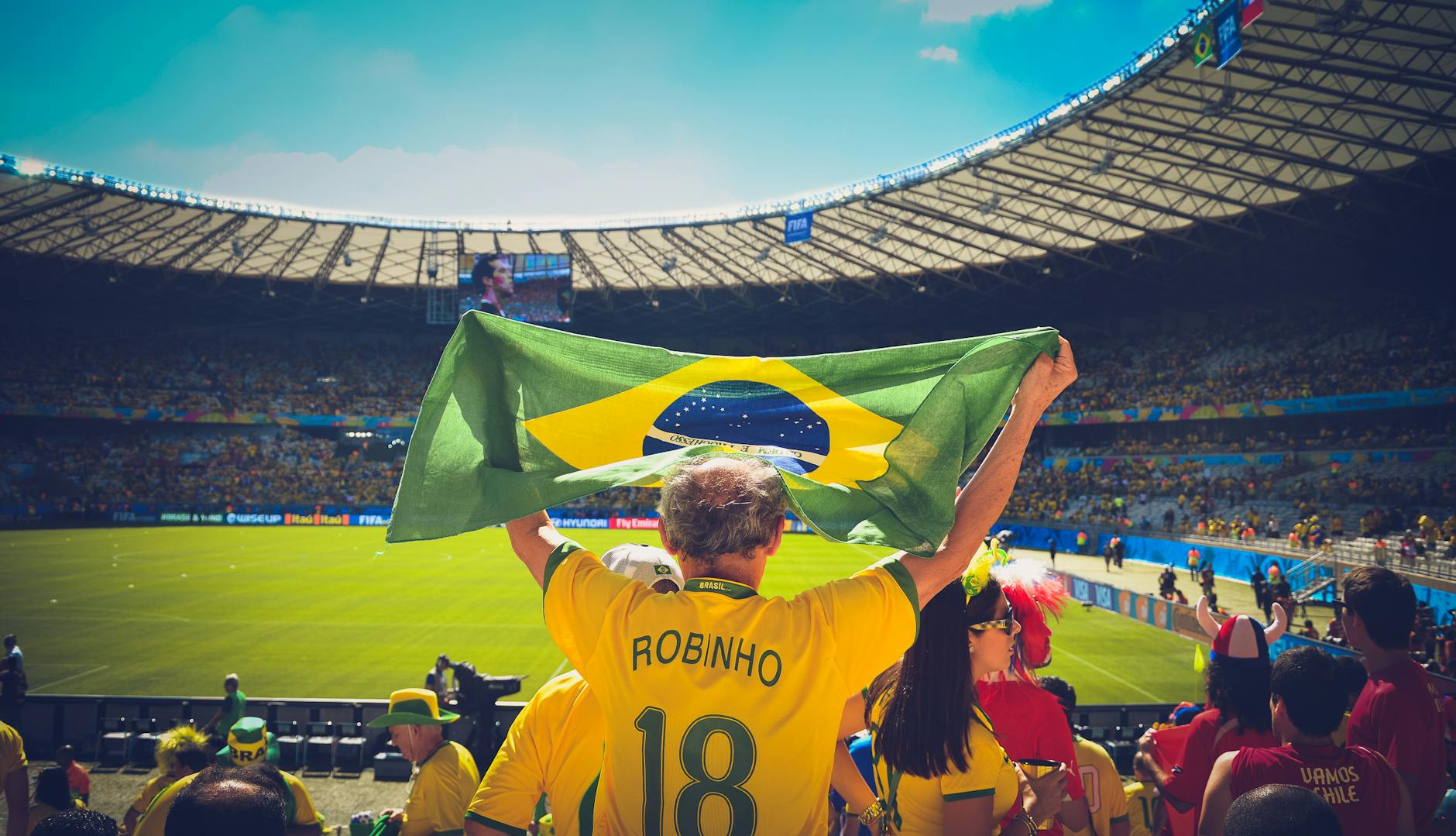
Photo by Caio on Pexels
Frequently Asked Questions
Q: What is a football team?
A: A football team is a group of players selected to compete together in any of the sports called football, including association football, American football, and Australian rules football. A team differs from a football club in that a club is a formally incorporated organization with members, governance, and support staff, while a team is specifically the playing unit. At the professional level, team rosters range from a 25-man registered senior squad in association football to 53-man active rosters in the NFL. Football teams can represent clubs, nations, or regions, and can also exist as exhibition selections such as all-star lineups that never play a competitive match.
Q: How many players are on a football team?
A: The active playing size depends on the football code: association football fields 11 per side, the NFL fields 11 per side from a 53-man active roster, and Australian rules football fields 18 per side. In association football, a matchday squad typically includes 18 players — 11 starters and 7 substitutes — drawn from a 25-man registered senior roster. In the NFL, 48 of 53 active roster players dress for a regular-season game, with 5 players designated inactive on gameday. The 2026 FIFA World Cup allows national teams to submit 26-player squads, up from 23 at previous tournaments, providing added rotation flexibility across a 104-match expanded format.
Q: What is the difference between a football team and a football club?
A: A football club is a formally incorporated entity with a governance committee and membership base, while a football team is the playing unit fielded to compete in matches. As Wikipedia notes, "the benefit of club formation is that it gives teams access to additional volunteer or paid support staff, facilities and equipment." In practice, elite clubs like Real Madrid, the Dallas Cowboys, or the Green Bay Packers operate as full organizations employing hundreds of staff, while the "team" is technically just the players selected for a specific match. Most professional teams are the competitive arm of a larger club organization, sharing branding but functioning as one operational layer within a broader structure.
Q: Which football teams are the most famous in the US in 2026?
A: According to YouGov's 2026 fame rankings, the Green Bay Packers are the most recognized football team in the United States at 92% awareness, followed by the Dallas Cowboys at 91% and the Chicago Bears at 89%. Fame measures the percentage of US adults who have heard of each team — which is distinct from popularity, measured by active fandom. The Packers' fame-to-popularity ratio shows a 50-point gap (92% fame, 42% popularity), and the Cowboys show an even wider gap (91% fame, 30% popularity). This divergence is significant for anyone analyzing betting line movement, since famous teams attract recreational money while high-popularity teams tend to attract sharper conviction-driven action.
Q: How do football teams adapt their tactics during a match?
A: Football teams adapt mid-game through substitutions, formation changes, and real-time positional adjustments communicated from the coaching staff via earpiece or touchline signaling. In association football, most professional competitions now allow 5 substitutions per match, giving coaches substantial personnel flexibility at halftime and in the final 30 minutes. In the NFL, tactical adaptation is more granular — teams can shift offensive and defensive personnel groupings on every single play, with specific packages deployed based on down, distance, and opponent alignment tendencies. Elite coaching staffs, such as those at the Kansas City Chiefs or Manchester City FC, treat mid-game adjustments as a prepared library of contingency plans rather than reactive improvisation, which is why their results under pressure consistently exceed expectations.
Q: Where do football teams most commonly underperform?
A: Football teams most commonly underperform when squad depth cannot cover concurrent injuries, suspensions, and international call-ups — particularly at center-back and central midfield in association football, and offensive line and cornerback in the NFL. Teams built around a single elite performer — a Cristiano Ronaldo-type talisman in soccer or a franchise quarterback in American football — show measurable fragility when that performer is neutralized, as Portugal's 2022 World Cup quarter-final exit to Morocco demonstrated. Tactically inflexible teams that rely on one dominant formation structure also consistently underperform against opponents who specifically prepare counter-systems. Tracking squad depth and tactical diversity is one of the primary functions of Football Compass's tournament coverage.
Q: What should bettors know about the 2026 FIFA World Cup team structure?
A: The 2026 FIFA World Cup features 48 national teams — up from 32 at Qatar 2022 — competing across venues in the United States, Canada, and Mexico in a 12-group format. Each group contains 4 teams, with the top two from each group and the 8 best third-placed teams advancing to a 32-team knockout bracket. The expanded format generates 104 total matches, significantly more than the 64 at Qatar 2022, and national squads may submit 26-player rosters. This format change particularly rewards teams with genuine squad depth that can rotate without quality drop-off across a compressed group-stage schedule. Football Compass publishes daily team form analysis, squad availability updates, and tactical previews across all 48 participating nations throughout the tournament.